

You can generate leads with SEO in 7 ways: do your keyword research, optimize your website for search engines, publish high-quality content, promote that content, build links, monitor your results and keep your content updated. Together they bring people who search for what you sell to your site, and turn those visits into inquiries.
According to a report from Ascend2, 73% of companies say SEO generates more leads than any other marketing initiative. A successful SEO campaign starts with your target audience and the words they search. It takes time to see results, so plan for months, or work with a B2B SEO agency that specializes in high-converting search terms.
1. Do your keyword research
If you want your business to succeed, you must focus on lead generation. And one of the best ways to generate leads is through SEO. To generate leads through SEO, you need to target the right keywords.
The first step in any SEO campaign is understanding your target audience and what they’re searching for. You can do this by conducting keyword research, which involves identifying the keywords and phrases people use to find your type of product or service.
For keyword research, you can use several tools and techniques, including competitor analysis, search engine trends, and Google AdWords.

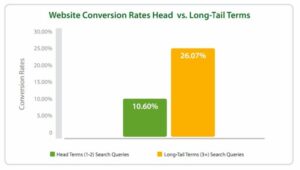
When choosing keywords, you must consider what your customers will likely search for. It would help if you also considered your competition. If your competitors target the exact keywords, you’ll need to find less competitive ones. Also, according to Profitworks, long-tail keywords convert 2.5x higher than head keywords.
2. Optimize your website for search engines
When you create a website, the most important thing you can do is ensure potential customers can easily find it. Optimizing your website for search engines is the best way to ensure that your site shows up near the top of the search results pages, where people are most likely to see it.
Once you have a list of target keywords, you can optimize your website and its content. This involves optimizing your website’s title tags, meta descriptions, header tags, content, and images for those keywords.

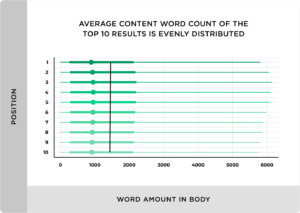
You can also optimize your website’s internal link structure to help Google crawl and index your pages more efficiently. Research by Backlinko reveals that pages ranking #1 on Google have an average of 1,447 words, indicating the importance of comprehensive content for SEO success.
3. Publish high-quality content
One of the most important aspects of SEO is publishing high-quality content that people will want to read. This content should be relevant to your target audience and include keywords and phrases people seek.
In addition, you should make sure that your content is updated regularly and remains fresh and relevant.
Using tools like Semrush, Moz, or Ahrefs can be a great way to determine the kind of content you need to create that targets those best keywords and ensure your website is optimized for SEO.
According to Demand Metric, content marketing generates three times as many leads as traditional outbound marketing, highlighting the significance of content in lead generation.
4. Promote your content
Once you’ve published your content, you must promote it to ensure that as many people as possible see it. You can do this by sharing it on social media, submitting it to article directories, and linking to it from your website.
Promoting your content on social media is essential if you want to generate leads and sales through SEO. Sharing your social media content will help increase website traffic and reach a wider audience. Additionally, social media can be a great way to connect with potential customers and build relationships with them.
73% of marketers say their social media marketing efforts are ‘somewhat effective’ or ‘very effective’ for their business.
5. Link building
Link building is the cornerstone of SEO success, underpinned by the principle of authority—secure backlinks from reputable sources to bolster your website’s credibility and improve its search rankings.
Creating links to your website can improve your ranking in the search engine results pages (SERPs), leading to more leads and sales for your business.
There are many ways to build links to your website, but the easiest way is to publish guest posts on popular websites. Guest posting is a great way to get your website in front of a new audience and help you build links to your website.

Another way to build links to your website is by submitting your website to directories like DMOZ. DMOZ is a directory of websites that volunteers compile. It is one of the most popular directories online, and it can help you get more exposure for your website. You can also submit articles to article directories like EzineArticles.com. When other websites link to your website, it tells Google it is valuable and worth ranking high in the search results.
However, you should never purchase links and only link to reputable sources that can enhance your domain’s ranking. Manual outreach to bloggers for guest posting and link placements remains highly credible for building links. This approach ensures authenticity and fosters relationships with trustworthy sources, strengthening your website’s authority and search engine visibility.9
93.8% of link builders say link quality is more important than link quantity, and 52.3% of digital marketers say link building is the hardest part of SEO.
6. Monitor your results
Once you’ve started your SEO campaign, you need to monitor your results to see how it’s performing. This involves tracking your website’s search engine rankings, click-through rates, and conversions.
One of the most important aspects of SEO is monitoring your results to see how your campaign is performing. This involves tracking your website’s search engine rankings, click-through rates, and conversions.

You can use tools like Semrush, Moz, or Ahrefs to help you track your SEO results. These tools can help you track your website’s search engine rankings, the number of links pointing to it, and its click-through rates and conversions.
It is also essential to ensure that your website loads swiftly. Google prioritizes user experience, and faster websites rank higher in search results. Choose a reliable web host to boost speed, ensure mobile responsiveness, and optimize images and scripts with tools like TinyPNG and WP Fastest Cache.
By tracking your results, you can see which aspects of your SEO campaign are working and which ones need improvement. This information can help you fine-tune your SEO campaign and achieve better results.
Google Analytics data reveals that websites with faster page load times experience lower bounce rates and higher average time on page, contributing to improved search rankings.
7. Keep your website content updated
Google likes websites that are constantly updating their content, and if you don’t update your website, it can hurt your ranking in the search results. One of the most essential SEO aspects is keeping your website updated. If you don’t update your website, it can hurt your ranking in the search engine results pages (SERPs).
This involves publishing new blog posts, adding new products to your inventory, and updating your contact information.
It would be best if you aimed to update your website at least once a week. This can be done by publishing new blog posts, adding new products to your inventory, or updating your contact information.
Addressing technical issues and staying abreast of algorithmic changes is essential to maintain and enhance your search visibility.
According to a study by HubSpot, websites that publish blogs frequently experience an average of 434% more indexed pages, 97%, than those that do not update their content regularly. This increase in indexed pages contributes to higher search engine rankings, improving visibility and organic traffic.
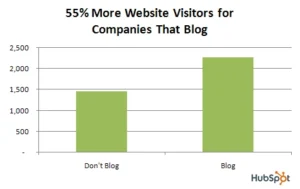
Source: HubSpot
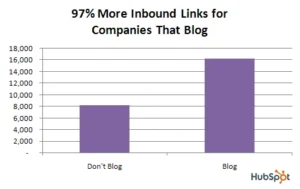
Source: HubSpot
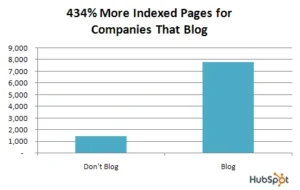
Source: HubSpot
Which Step to Start With
Start with keyword research, since every other step depends on it. Find 10 to 20 terms your buyers search when they’re close to buying, and make sure a page on your site answers each one. Then build links to those pages and track which ones bring in leads.
If you want help putting this into practice, an SEO agency can run the campaign with you. Our team does this work for B2B companies.